Essential Oil Safety: The Dilution, Storage and Don't-Do-This Guide Nobody Reads
Essential oils are natural, which somehow got translated to harmless — and that translation is where the burns, rashes and poisonings come from. Potent plant concentrates deserve respect. The safety guide: why it matters, the dilution-and-application rules and the dangerous mistakes that are easier to make than you’d think.

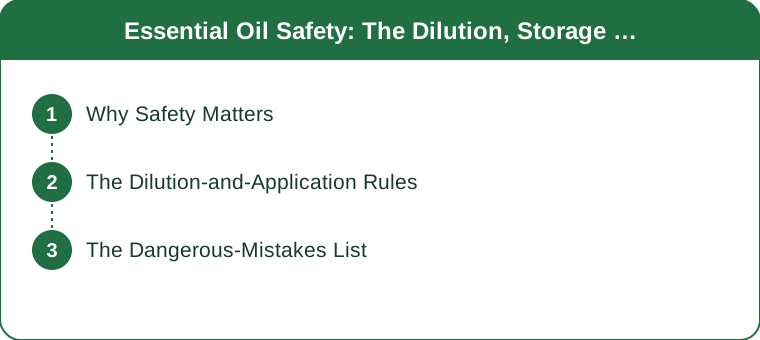
Why Safety Matters
The natural-isn’t-harmless reality: the concentration truth (the essential oils being highly concentrated plant compounds — the many-pounds-of-plant in one bottle; the potent-not-gentle reality behind the beginner chapter’s enthusiasm), the skin-reaction risk (the undiluted oils causing irritation, burns and sensitization — the neat-application danger; the why-dilution-exists), the ingestion-and-poisoning caution (the do-not-swallow default — the toxicity risk, especially the pet-and-child danger; the internal-use is-not-DIY territory), the sensitization phenomenon (the develop-an-allergy-over-time risk from overuse — the less-is-more principle; the rotate-and-moderate wisdom), and the respect-the-potency frame (the essential oils as useful tools that demand informed handling — the safety-first enjoyment; the natural-and-powerful both-true).

The Dilution-and-Application Rules
Using them safely: the carrier-oil rule (the essential oils diluted in a carrier — the coconut, jojoba or almond base; the never-neat-on-skin default; the typical low-percentage dilution for body use), the patch-test habit (the diluted oil tested on a small skin patch first — the reaction found before the full application; the sensitivity check), the diffusion-safety (the well-ventilated, time-limited diffusing — the diffuser chapter’s don’t-overdo; the intermittent-not-constant; the pet-and-child-and-respiratory awareness), the photosensitivity caution (the citrus oils that react with sun — the don’t-apply-then-sun-expose rule; the peppermint-focus chapter’s cousin caution), the specific-oil-knowledge (the some-oils-need-extra-care reality — the research-the-oil habit; the reputable-source information), and the storage-and-handling (the dark-glass, cool-storage, out-of-reach-of-kids-and-pets — the keep-it-safe-and-potent basics).
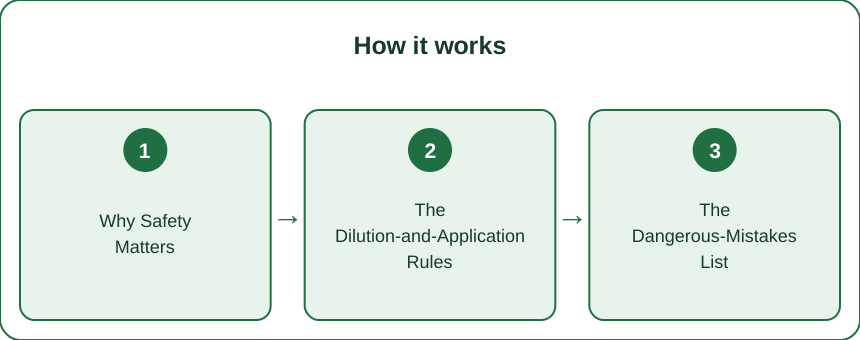
The Dangerous-Mistakes List
What to never do: the never-undiluted-on-skin rule (the neat-application that burns and sensitizes — the top mistake; the always-dilute discipline), the never-in-the-eyes-or-mucous-membranes caution (the sensitive-areas kept clear — the flush-with-carrier-oil-not-water if it happens), the don’t-ingest-without-expertise rule (the internal-use that’s not a casual DIY — the poisoning risk; the leave-it-to-professionals), the pet-safety-emphatic tier (the many oils toxic to cats and dogs — the diffuse-carefully-or-not-around-pets; the vet-check-before), the pregnancy-and-condition caution (the some-oils-to-avoid in pregnancy and with certain conditions — the check-first, ask-a-professional; the not-all-oils-for-all-people), the kids-and-babies extra-care (the diluted-more-or-avoided for little ones — the age-appropriate caution), and the frame (essential oil safety as the unglamorous foundation that makes aromatherapy enjoyable instead of harmful — the dilute, patch-test, don’t-ingest and pet-safe rules; the potent tools handled with the respect they need). Always dilute, patch-test, never ingest, protect pets: the oils, used safely.
Natural doesn’t mean harmless — essential oils are potent concentrates that burn, sensitize and poison when misused. Always dilute in a carrier oil, patch-test, never ingest casually, watch citrus-and-sun, and know many oils are toxic to pets. Respect the potency and aromatherapy stays enjoyable.
Keep Reading
This article is for general informational purposes only and is not medical advice. Always consult a qualified health professional for guidance specific to you.