5 Scent Shifts That Make a Home Feel Like Autumn Without Going Full Pumpkin
Quick Answer: The late-summer to autumn transition is best served by warm-but-not-sweet notes - woods, herbs, and citrus with depth - rather than the baking spices that belong to late October onward. Shift in three stages: green and herbal in early September, woody and warm through October, then spiced from November. Going straight to cinnamon in August makes a warm room feel heavier, which is the opposite of what the season actually needs.
The pumpkin candles arrive in stores in August, which is roughly two months before they make any sense.
There is a genuinely different scent character to the in-between weeks, and it is more interesting than the spiced version everyone jumps to.
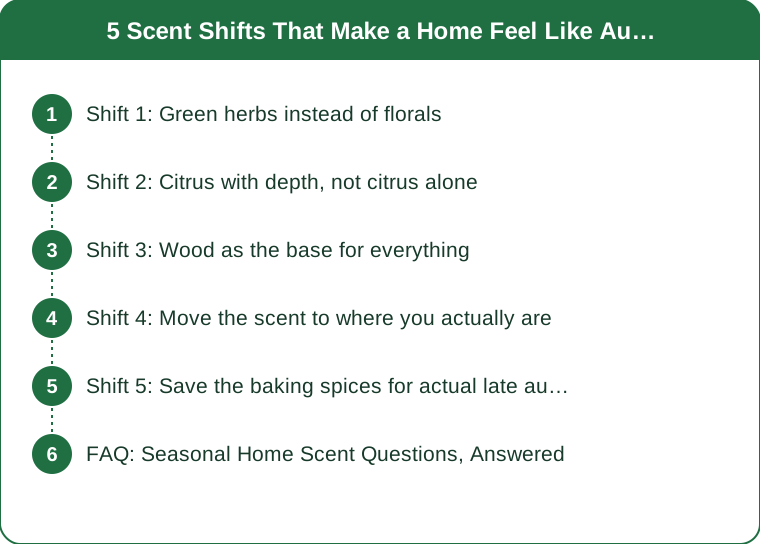
Shift 1: Green herbs instead of florals
Early September is not autumn yet, and the transition starts by getting drier rather than warmer.
Summer scent tends toward bright florals and sharp citrus - lots of top note, very little base. That reads as fresh in July and thin in September, once the light changes and evenings cool.
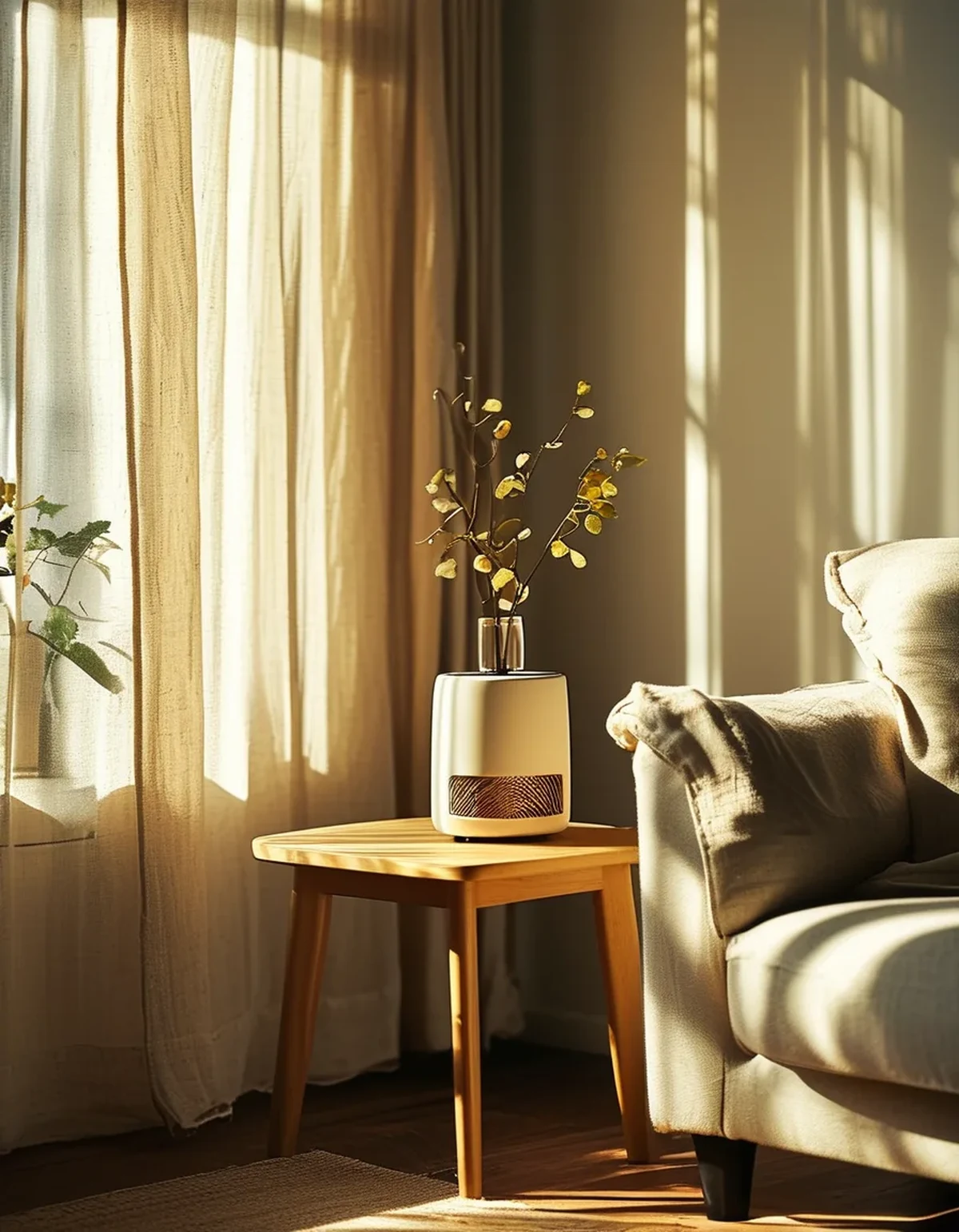
The first move is toward herbaceous: rosemary, clary sage, bay, a little eucalyptus. These sit between fresh and warm, which is exactly where the weather is. They also work well in a home that still has windows open during the day and closed at night.
A simple early-transition blend: 3 drops rosemary, 2 drops bergamot, 1 drop cedarwood. The cedarwood is barely present and does the important job of giving the blend a floor - it is what makes the difference between a scent that evaporates in twenty minutes and one that lingers.
This is also the stage where a single potted rosemary or a bundle of herbs near a sunny window does most of the work without any diffuser at all.
Shift 2: Citrus with depth, not citrus alone
Do not abandon citrus for autumn - change which citrus and what sits underneath it.
Summer citrus is lemon and grapefruit: bright, sharp, short-lived. Autumn citrus is sweet orange, blood orange, and bergamot - rounder, slightly bitter, and much better paired with wood.
The reason this works is structural. Citrus notes are volatile and disappear quickly; wood and resin notes are heavy and last for hours. On their own, citrus is gone before you have finished making coffee. Anchored to a base note, the same citrus reads for far longer.
A blend that carries the whole season: 4 drops sweet orange, 2 drops cedarwood, 1 drop clove. One drop of clove, not three - it is there as an accent, not a subject.
This one is genuinely forgiving. Sweet orange is well tolerated by most people, which makes it a reasonable choice for shared spaces where you cannot poll everyone’s preferences.
Shift 3: Wood as the base for everything
Autumn is a base-note season, and this is the single change that does the most.
Summer rooms carry scent well - warm air holds volatile compounds and moves them around. Cooler autumn rooms with closed windows do not, so a scent that was pleasant in July can feel either absent or, once the heating comes on, cloying.
Woods solve both problems. Cedarwood, sandalwood, and vetiver are heavy, slow-evaporating, and warm without being sweet. They give lighter notes something to sit on and they persist through an evening.
Start lower than feels right. Woods build over hours in a closed room, and a blend that seems subtle at 6pm can be a great deal by 9pm. Roughly a third of your total drops as base notes is a reasonable starting ratio.
If you use one oil for the whole season, cedarwood is the practical choice - inexpensive, widely available, and it pairs with almost everything else on this list.
Shift 4: Move the scent to where you actually are
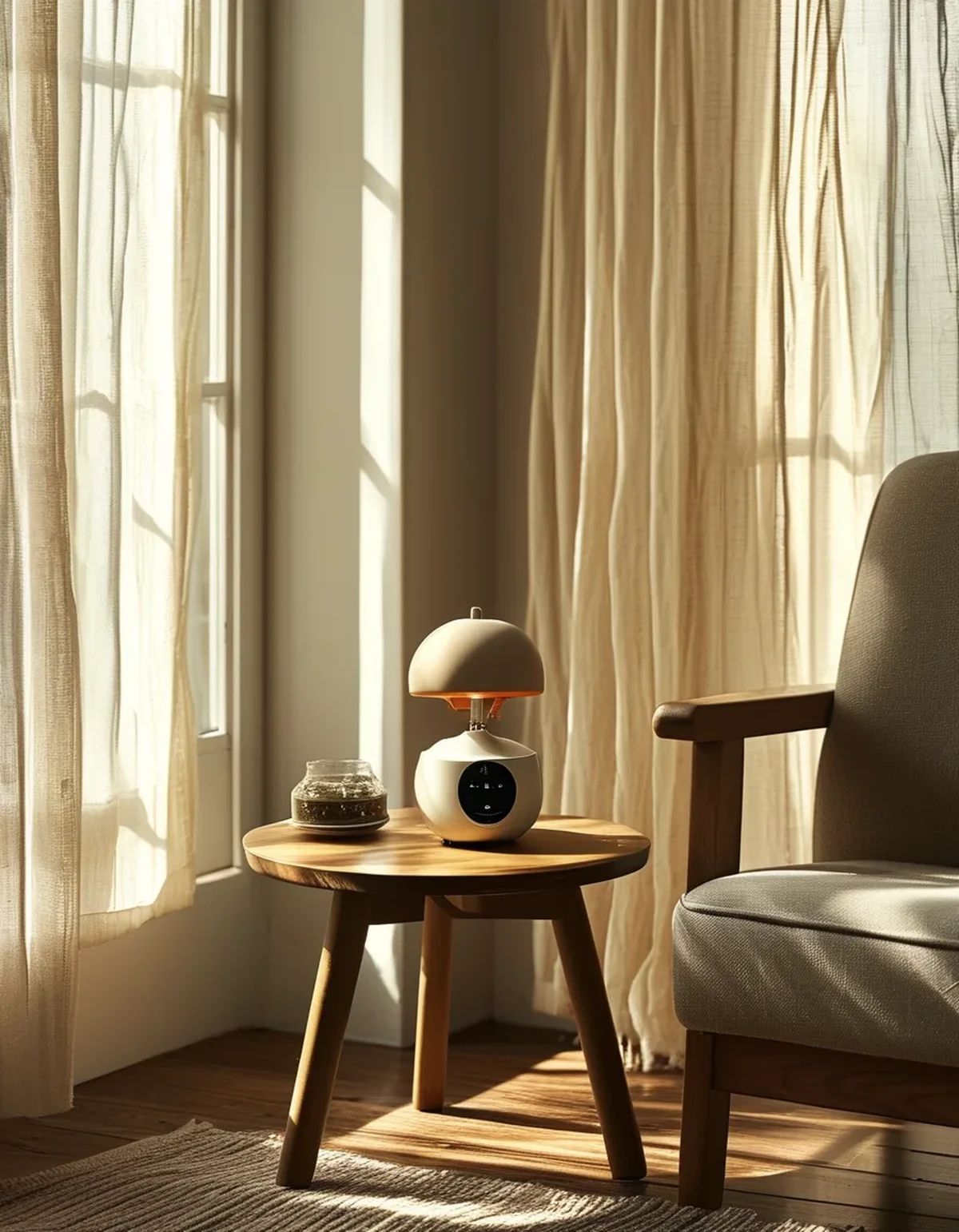
This one is about placement rather than the oils themselves, and it matters more once windows close.
In summer, open windows create constant air exchange, so a diffuser in a corner still distributes reasonably. In a closed autumn house, scent stratifies - it pools where it is released and barely reaches the next room.
Practical adjustments:
- Move the diffuser to where you sit, not to where it looks best. The bookshelf across the room is doing almost nothing for you.
- Run it shorter and more often. Thirty minutes on, an hour off, produces a more noticeable effect than three continuous hours, because your nose adapts to constant exposure within minutes.
- Watch the heating vents. A diffuser near a vent gets scattered and dried out. A few feet away is better.
- Use the entryway. The strongest scent impression in any home happens in the first ten seconds of walking in, and after that nobody who lives there notices it at all.
Shift 5: Save the baking spices for actual late autumn
Cinnamon, clove, nutmeg, and pumpkin blends are the ones everyone reaches for, and they work considerably better when they arrive late.
There are two reasons to hold off. First, contrast - a spiced blend in November lands as seasonal because the preceding two months were not spiced. Used continuously from August, it becomes background and stops registering entirely.
Second, temperature. Baking spices are warming scents, and in a 78F room in early September they read as heavy rather than cozy. The same blend in a 65F room in November reads exactly as intended.
When you do bring them in, treat them as accents. One drop of clove or cinnamon to four or five drops of a carrier scent like orange or cedarwood. Straight cinnamon is overwhelming in an enclosed room and, worth knowing, cinnamon bark oil is a common skin irritant - keep it in the diffuser rather than anywhere near skin.
A good November blend: 4 drops sweet orange, 2 drops cedarwood, 1 drop cinnamon, 1 drop clove.
FAQ: Seasonal Home Scent Questions, Answered
Are essential oils safe around pets?
Several are not. Tea tree, pine, citrus oils, peppermint, and cinnamon are among those documented as problematic for cats in particular, since cats lack an enzyme pathway for metabolizing many of these compounds. Birds are even more sensitive. If you have pets, diffuse only in well-ventilated rooms the animal can leave freely, and check specific oils against a veterinary source rather than assuming.
How many drops should I actually use?
For a standard 100ml ultrasonic diffuser, 5-8 drops total is a normal range. More is not better - the room saturates, your nose adapts, and you stop perceiving it while everyone who walks in finds it overwhelming.
Why do I stop smelling my own diffuser?
Olfactory adaptation, and it happens within minutes of constant exposure. This is why intermittent running beats continuous, and why the entryway is the highest-value placement in the house.
Do candles and diffusers do the same thing?
Differently. Candles use heat, which changes the scent profile and adds combustion byproducts to the air. Diffusers disperse oil cold, keeping the profile closer to the oil itself. For air quality, cold diffusion in a ventilated room is generally the better option, particularly for anyone with asthma.
TL;DR:
- Transition in three stages: green and herbal in September, woody and warm in October, spiced from November.
- Keep citrus but switch to sweet orange and bergamot, and anchor it to a wood base so it lasts.
- Cedarwood is the workhorse of the season - it gives lighter notes a floor to sit on.
- Closed windows change everything: move the diffuser to where you sit and run it intermittently, not continuously.
- Hold baking spices until late autumn, then use them as accents - one drop to four or five.
- Check any oil against a veterinary source if you have cats or birds.
The in-between weeks have their own character, and skipping straight to cinnamon in August means missing it and dulling the spiced version by the time it actually fits. Three stages, a wood base, and better placement covers the whole season.
Keep Reading
This article is for general informational purposes only and is not medical advice. Always consult a qualified health professional for guidance specific to you.