Lavender at Lights-Out: Building a Scent-Based Sleep Ritual
Quick Answer: Lavender is the most evidence-backed essential oil for sleep, showing modest but consistent improvements in sleep quality and anxiety when inhaled. The real benefit comes from pairing it with a consistent nightly ritual — five drops in a diffuser during the last 30 minutes before bed, every night — so your brain learns to associate the scent with winding down.
The diffuser clicks on. The room smells faintly of a lavender field you’ve never actually visited. And somehow, within a couple of weeks of doing this nightly, your shoulders start dropping the second that smell hits the air.
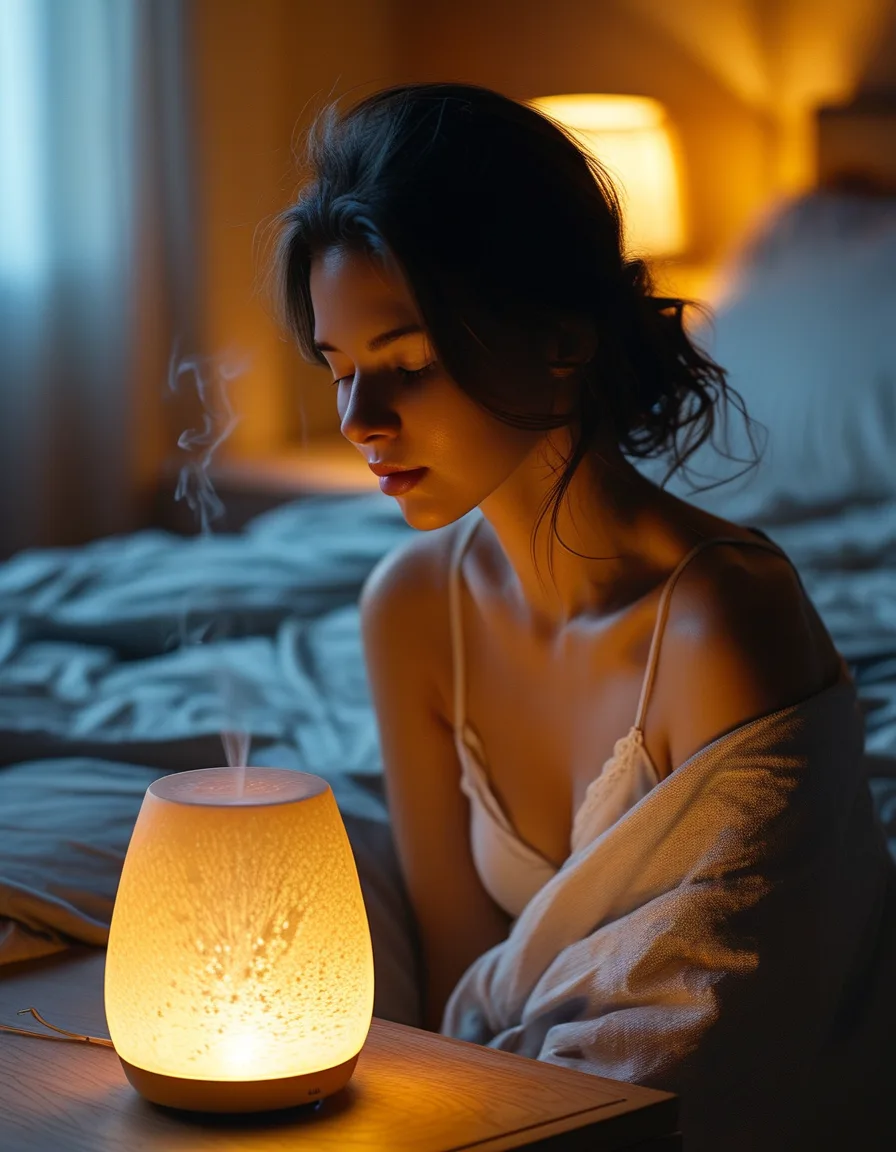
Does lavender essential oil actually help with sleep?
Of all the essential oil claims floating around wellness circles, lavender-for-sleep is the one with actual receipts — modest, real, trial-tested receipts, not miracle-cure marketing. It’s not a sedative in the pharmaceutical sense; it’s more like a nervous-system lullaby with some research behind it. The important nuance is that the oil itself is only part of the story — the ritual you attach it to is doing at least as much work.

What does the evidence on lavender and sleep actually say?
Across a number of studies, inhaled lavender is associated with consistent small improvements in both sleep quality and anxiety levels. “Small” is the honest word here — this isn’t a knockout pill, it’s a gentle nudge. But consistent small nudges, repeated nightly, compound into a real habit over a few weeks, which is arguably more useful than a one-off strong effect you can’t sustain.
How do you turn lavender oil into an actual sleep habit?
This is the part most people skip, and it’s the part that matters most. Your brain learns scent associations remarkably fast — faster than it learns most lectures you give yourself about bedtime discipline. Run the diffuser only during the last 30 minutes before bed, every single night, at the same point in your routine. Scent plus routine equals conditioning: eventually the smell alone starts triggering the shutdown sequence, like a Pavlov experiment you actually get to sleep through instead of sit through.

What’s the right setup for a lavender diffuser ritual?
Keep it simple and repeatable so it’s easy to stick with:
- Five drops of lavender oil in the diffuser’s water tank
- Warm, dim lighting in the room — bright light works against the wind-down cue
- Phone in exile, ideally in another room or at least out of reach
- Same time, same routine, every night
If a diffuser feels like one gadget too many, the folk version works fine too: two drops on a tissue tucked near your pillow. It’s less elegant, but the mechanism is identical, and it costs nothing.

Is more lavender oil better for sleep?
No, and this is worth being clear about. More drops is not more sleep — it’s just a stronger hallway smell, and it can tip into overpowering territory that actually works against relaxation. Keep sessions short, keep the room ventilated rather than sealed up tight, and be mindful of pets — cats in particular do better with distance from essential oil diffusers. Gentle is the entire brand here, not intensity.
Myth vs Fact: Lavender and Sleep
Myth: Lavender oil will knock you out like a sleep medication. Fact: it’s a mild, modest aid tied to relaxation and lower anxiety, not a sedative — think “gentle nudge,” not “lights out.”
Myth: More drops means a stronger sleep effect. Fact: past a light dose, more oil just makes the room smell overwhelming without adding sleep benefit, and can be irritating in a poorly ventilated space.
Myth: The oil alone does the work. Fact: the nightly ritual — same time, same routine, every night — is doing at least as much as the lavender itself, because it’s training a scent-to-sleep association over time.
FAQ: Using Essential Oils for Sleep
How many drops of lavender oil should I use for sleep?
Around five drops in a standard diffuser water tank is a reasonable starting point for most rooms. If you’re using the tissue-by-the-pillow method instead, two drops is plenty — you’re aiming for a light, ambient scent, not an overpowering one.
How long before bed should I start the diffuser?
Roughly 30 minutes before you actually plan to fall asleep works well, since it gives the scent time to fill the room while you’re already winding down. Running it at the same point in your routine every night is what builds the association.
Is lavender essential oil safe to use around pets?
Cats in particular are more sensitive to essential oils than dogs or humans, so it’s worth keeping diffusers in a separate, well-ventilated room if you have a cat. Short sessions and good airflow are sensible precautions for any pet in the home.
TL;DR:
- Lavender has modest, consistent research support for better sleep quality and lower anxiety
- The ritual matters as much as the oil — same time, same routine, every night
- Five drops in a diffuser for the last 30 minutes before bed is a solid default setup
- A tissue with two drops by the pillow is a fine no-diffuser alternative
- More oil isn’t better — keep doses light, rooms ventilated, and pets (especially cats) at a distance
Keep Reading
This article is for general informational purposes only and is not medical advice. Always consult a qualified health professional for guidance specific to you.