Aromatherapy Without the Hype: What Essential Oils Can (and Cannot) Do
Aromatherapy lives in wellness culture’s most polarized zip code: one neighbor swears oils cure everything, the other dismisses the whole street as scented pseudoscience — and the actual evidence sits, as usual, in the unfashionable middle. Scent is a genuine neurological fast-lane (smell wires directly into the brain’s emotion and memory centers), a handful of oils have real clinical trials behind specific uses, and the safety rules matter more than the marketing admits. Here is aromatherapy for grown-ups: what holds up, what does not, and how to start well. (Oils are complements, never treatments — anything medical stays with your doctor.)
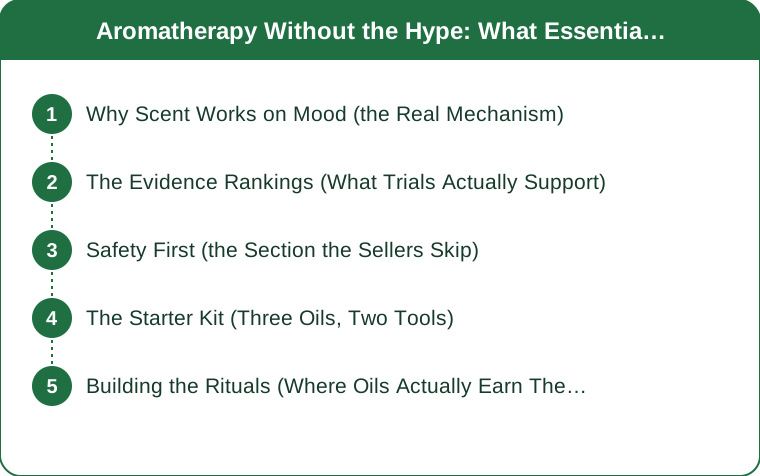
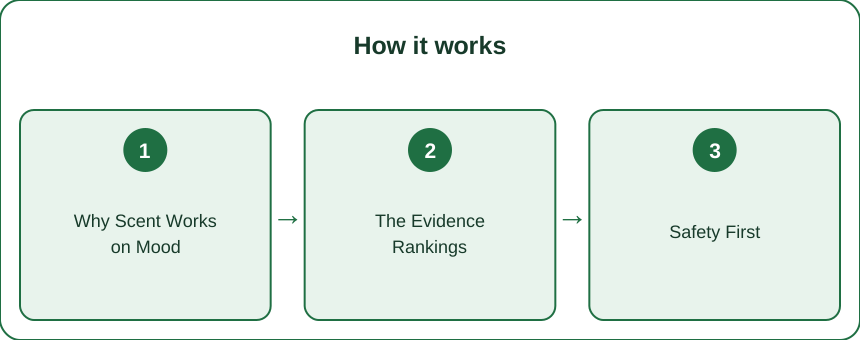
Why Scent Works on Mood (the Real Mechanism)
The legitimate science underneath: smell is the only sense with a direct anatomical shortcut to the limbic system — the brain’s emotion-and-memory headquarters — bypassing the relay stations other senses route through, which is why a scent can shift mood or summon a memory faster than thought (the madeleine effect, neurologically real). Aromatherapy leverages this wiring: pleasant, associatively-loaded scents can genuinely downshift arousal, and repeated pairing (lavender with every wind-down) builds conditioned relaxation cues — a scent-triggered routine your nervous system learns to obey. That mechanism is honest and useful. The overreach starts when sellers promise the oils treat diseases rather than moods.
The Evidence Rankings (What Trials Actually Support)
The honest leaderboard: lavender leads with real randomized trials — inhaled lavender shows modest but consistent benefits for anxiety and sleep quality (the best-studied claim in the field; an oral lavender preparation has European approval for anxiety), peppermint has legitimate evidence for tension-headache relief (diluted, applied to temples) and nausea reduction, citrus oils show mood-lift signals in small studies, and rosemary carries intriguing alertness findings. The rest of the catalog — immune-boosting blends, detox oils, anything treating infections or hormones — runs on marketing, not trials. The pattern to internalize: oils have decent evidence for mood, relaxation and minor symptomatic comfort, and none worth trusting for treating disease. Buy accordingly.
Safety First (the Section the Sellers Skip)
The rules that prevent regret: never apply undiluted oils to skin (essential oils are extreme botanical concentrates — dilute to 1–3% in a carrier oil like jojoba or almond: roughly 6–18 drops per ounce), never ingest oils regardless of what a wellness influencer suggests (real toxicity, no oversight), phototoxicity is real (citrus oils on skin plus sunshine equals chemical burns — the margarita-lime cautionary tales are genuine), diffuse in ventilated rooms in 30–60 minute sessions rather than continuously, and know the special populations: pregnancy (several oils contraindicated — clear with your provider), babies and young children (many oils inappropriate — pediatric guidance required), and pets (cats especially lack the liver enzymes for several common oils — diffuse where they can leave, and research your specific animals). Concentrates deserve concentration.
The Starter Kit (Three Oils, Two Tools)
The minimalist entry: lavender (the evidence leader — sleep and wind-down duty), peppermint (headache temples, focus, the 3pm sniff), and one citrus (lemon or sweet orange — the mood-brightener and the kitchen’s air-freshener upgrade); tools: a basic ultrasonic diffuser ($20–30 — water plus five-ish drops) and a small carrier-oil bottle for topical dilutions. Buying literacy in one line: look for the Latin botanical name, extraction method and single-ingredient purity on labels — therapeutic grade is an unregulated marketing term, not a certification. Total kit: under $50, covering 90% of evidence-supported home aromatherapy. The 47-oil influencer starter chest can stay in the cart.
Building the Rituals (Where Oils Actually Earn Their Keep)
The application layer — because oils work best embedded in routines: the sleep pairing (lavender diffused during the last 30 pre-bed minutes, every night — consistency builds the conditioned cue that becomes the real active ingredient), the bath upgrade (5–8 drops pre-diluted in a carrier or bath oil — never neat drops on bathwater, which float and meet skin at full strength), the shower-steam shortcut (eucalyptus drops on the shower floor for a congestion-clearing steam room — the lazy-genius application), the focus signal (peppermint or rosemary at the desk as a work-mode trigger), and the DIY room-and-linen mist (water, splash of witch hazel, 15 drops — the commercial-spray replacement). The through-line: oils as sensory punctuation for habits you are already building. Scent marks the ritual; the ritual does the work; the pairing compounds. That is aromatherapy’s honest job — and done honestly, it does it rather well.
Aromatherapy, right-sized: a real neurological mechanism, a short list of trial-backed uses (lavender-sleep, peppermint-headache, citrus-mood), safety rules with actual stakes, and a $50 starter kit that covers everything evidence supports. Diffuse the lavender tonight during wind-down and let the conditioning begin. The oils will not cure anything — and used honestly, they will still make your evenings measurably softer. That was always the fair trade.
Keep Reading
This article is for general informational purposes only and is not medical advice. Always consult a qualified health professional for guidance specific to you.