Peppermint: The Sharpest Tool in the Oil Drawer
Quick Answer: Diluted peppermint oil applied to the temples has real, study-backed support for easing tension headaches, and a quick sniff from the bottle can cut through afternoon brain fog. It’s a “sharp tool” though — always dilute before skin contact (about 2-3 drops per teaspoon of carrier oil), keep it away from eyes, and never diffuse it around cats.
If lavender is the oil cabinet’s soft blanket, peppermint is its espresso shot — sharp, cold, and just a little dramatic about it. It also happens to carry real evidence behind it for tension headaches, which is more than most essential oils can claim. Handle it with a bit of respect, though: this is the one oil in the drawer that genuinely bites when you use it wrong.


Does Peppermint Oil Actually Help With Headaches?
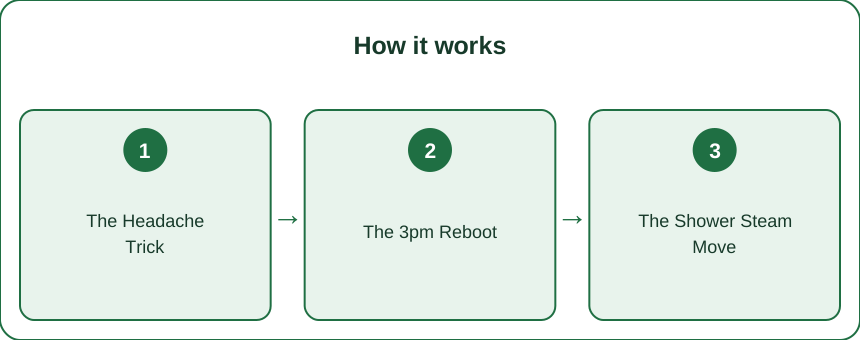
Diluted peppermint oil applied to the temples has legitimate research support for easing tension headaches specifically — the kind that feel like a tight band around your skull, not migraines. The theory is that the cooling menthol sensation essentially “distracts” the pain signal, competing with it at the nerve level. It’s not a cure-all, but for a mild, tension-type headache, it’s one of the more evidence-backed home remedies out there.
How to use it: dilute 2-3 drops of peppermint oil per teaspoon of carrier oil (like jojoba or almond oil), and massage a small amount onto your temples and the back of your neck. Never apply peppermint oil undiluted directly to skin.
If you’re new to peppermint, it’s worth doing a small patch test on your inner arm first, since sensitive skin can react even to a properly diluted blend. And if headaches are frequent, severe, or paired with other symptoms, that’s a conversation for a doctor, not just a bottle of oil — peppermint is a nice supporting tool, not a replacement for medical care when something more serious is going on.
Can Peppermint Oil Help With Afternoon Brain Fog?
When the 3 p.m. slump rolls in, one sniff straight from the bottle can help. Menthol lights up alertness circuits in your brain noticeably faster than the walk to the coffee machine — and it pairs beautifully with actually taking that walk. Keep a small bottle at your desk for exactly this moment; a couple of slow inhales is usually enough to cut through the fog.

How Do You Use Peppermint Oil for Congestion?
Two drops on the shower floor — not directly on your skin — turns your morning rinse into a eucalyptus-adjacent steam session. The heat releases the menthol into the air, and breathing that in can make a stuffy nose feel noticeably clearer. This is a trick worth keeping on retainer through congestion season, whether that’s from allergies or a cold.
A few practical notes if you try it: keep the drops away from the drain area you’ll be standing on directly, since the oil can make tile slightly slippery, and crack a window or vent fan if the scent feels too intense in a small bathroom. Two drops is genuinely plenty — this is one of those cases where more oil just means a more overwhelming shower, not a more effective one.
What Nobody Tells You About Peppermint Oil
- Neat peppermint burns skin. Applying it undiluted isn’t just “strong” — it can cause a genuine chemical burn, so always dilute first.
- Near the eyes, it’s a regret with a timeline. Even a diluted drop too close to your eyes will make you regret it within seconds — wash hands after handling and keep it well clear of your face.
- It’s dangerous for cats. Peppermint (like many essential oils) is one that cats’ bodies genuinely cannot process well. If you have a cat, diffuse peppermint in a room they don’t have access to, or skip diffusing it altogether.
- A little goes a long way. Because it’s so potent, more drops don’t mean better results — they just mean more risk of irritation.
Mini FAQ
Is it safe to put peppermint oil directly on your skin?
No — peppermint oil should always be diluted before touching skin, typically 2-3 drops per teaspoon of a carrier oil like jojoba or coconut oil. Undiluted, it can cause burning, redness, or irritation.
How does peppermint oil help with tension headaches?
Diluted and massaged onto the temples, peppermint’s menthol creates a cooling sensation that appears to interfere with tension-headache pain signals. It’s best suited to mild tension headaches rather than migraines, and shouldn’t replace medical care for severe or recurring headaches.
Is peppermint oil safe around pets?
It’s not safe for cats, whose bodies process essential oils poorly — avoid diffusing it in rooms they can access. If you have pets of any kind, it’s worth checking with your vet before regularly diffusing any essential oil at home.
TL;DR
- Diluted peppermint oil on the temples has real support for easing tension headaches.
- A quick sniff from the bottle can cut through afternoon brain fog fast.
- Two drops on the shower floor make a steamy, decongesting rinse.
- Always dilute before skin contact (2-3 drops per teaspoon of carrier oil) and keep it away from eyes.
- Never diffuse peppermint oil around cats — it’s one they genuinely can’t process.
Keep Reading
This article is for general informational purposes only and is not medical advice. Always consult a qualified health professional for guidance specific to you.