5 Signs Your Essential Oils Aren't Actually Doing Anything (And the Fix for Each)
Quick Answer: The five most common signs essential oils aren’t working are scent fatigue, wrong dilution, wrong oil for the goal, inconsistent use, and using synthetic ‘fragrance oil’ instead of a true essential oil — each has a specific, checkable fix.
You bought the lavender, ran the diffuser every night, and still feel just as wired at bedtime as before. Before writing off essential oils entirely, check which of these five specific issues might be the actual culprit.

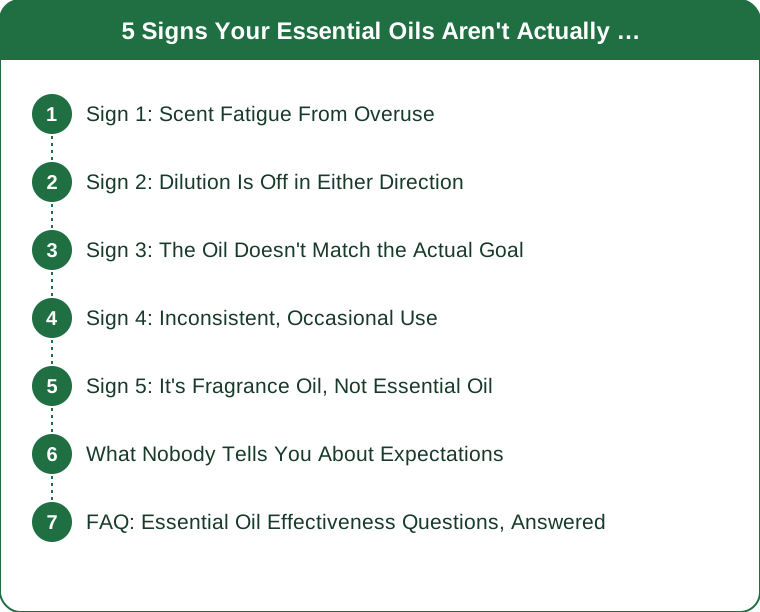
Sign 1: Scent Fatigue From Overuse
Your olfactory system adapts to constant, unchanging scent exposure within days, meaning a diffuser running the exact same oil nightly for weeks may simply stop registering as strongly — this isn’t the oil losing potency, it’s your nose adapting.
Fix: rotate between 2-3 oils for the same general goal (lavender, chamomile, and cedarwood for sleep, for example) rather than using one continuously.
Sign 2: Dilution Is Off in Either Direction
Too dilute in a diffuser (too few drops for the room size) means barely-there effect; too concentrated on skin without proper carrier oil dilution can actually cause irritation that masks any calming benefit.
Fix: follow standard diffuser ratios (roughly 3-5 drops per 100ml of water for most home diffusers) and standard topical dilution (2-3% for adults, meaning roughly 12-18 drops per ounce of carrier oil).
Sign 3: The Oil Doesn’t Match the Actual Goal
Using an energizing oil (peppermint, citrus) at bedtime, or a purely aesthetic scent with no research behind the specific effect you want, sets up disappointment regardless of oil quality.
Fix: match oils to their more evidence-supported use — lavender and chamomile for relaxation, peppermint for alertness/focus, eucalyptus for congestion — rather than picking based on scent preference alone.

Sign 4: Inconsistent, Occasional Use
Many aromatherapy effects (especially for sleep or stress) build with consistent nightly use over 2-4 weeks, similar to how a habit or routine cue works — using an oil sporadically, only on notably bad nights, doesn’t give it a fair chance to establish that routine association.
Fix: commit to the same oil at the same time daily for at least 2-3 weeks before judging effectiveness.
Sign 5: It’s Fragrance Oil, Not Essential Oil
Synthetic fragrance oils smell similar but contain none of the actual plant compounds responsible for aromatherapy’s documented effects — they’re designed for scent only, not therapeutic compound delivery.
Fix: check the label specifically for ‘100% pure essential oil’ and a botanical (Latin) name — pure oils list this; fragrance oils typically don’t.
What Nobody Tells You About Expectations
Essential oils generally provide mild, supportive effects — helpful as part of a broader relaxation or focus routine, not a replacement for addressing underlying sleep or stress issues directly. Expecting a strong, medication-like effect sets up disappointment regardless of how correctly they’re used.

FAQ: Essential Oil Effectiveness Questions, Answered
How can I check if my essential oil is authentic?
Look for a GC/MS (gas chromatography-mass spectrometry) test report from the brand, a listed botanical name, and a country of origin — vague labeling is a red flag.
Can essential oils lose potency over time?
Yes — most have a shelf life of 1-3 years depending on the oil type, and citrus oils in particular degrade faster than woody oils like cedarwood or sandalwood.
Is it normal to need different oils for different seasons or moods?
Yes — many people find rotating oils based on season or specific need (energy vs. calm vs. focus) works better long-term than relying on a single ‘signature’ scent.
TL;DR:
- Rotate oils to avoid scent fatigue instead of using one continuously
- Check dilution ratios — both diffuser and topical use have standard, checkable ranges
- Match the oil to a goal it’s actually suited for
- Use consistently for 2-3 weeks before judging effectiveness
- Confirm it’s a true essential oil, not synthetic fragrance oil
Before concluding essential oils ‘just don’t work’ for you, run through these five checks — most disappointing results trace back to one of them rather than the oils themselves being ineffective.
Keep Reading
This article is for general informational purposes only and is not medical advice. Always consult a qualified health professional for guidance specific to you.