Essential Oils Doing Nothing for You? 4 Reasons Why — Before You Give Up
Quick Answer: Essential oils often ‘don’t work’ due to low-quality diluted oils, using the wrong amount for the room size, scent fatigue from daily use of the same oil, or expecting a strong sedative effect instead of a mild, supportive one. Check quality first — it’s the most common gap.
You bought the lavender oil everyone recommends. Three weeks of diffusing later: no better sleep, no less stress. Before writing off aromatherapy entirely, walk through these checks.
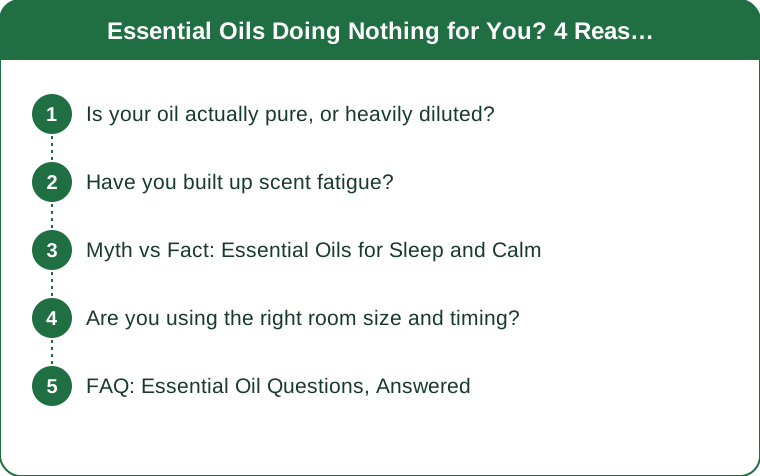
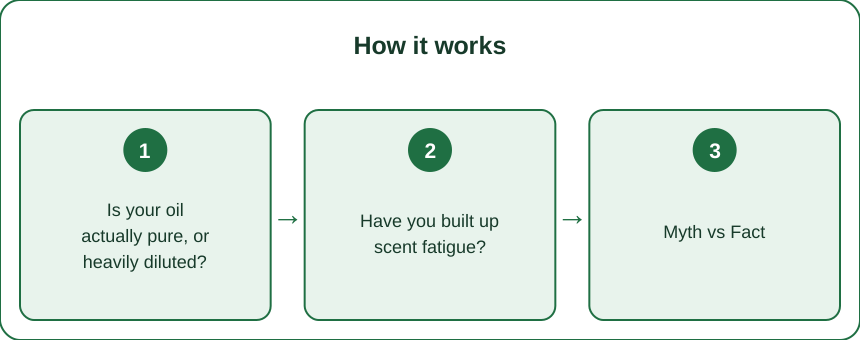
Is your oil actually pure, or heavily diluted?
This is the most overlooked issue. Many bottles labeled ‘100% pure’ are diluted with carrier oil or synthetic fragrance compounds well below the concentration used in studies showing calming effects.
Check for a botanical name on the label (Lavandula angustifolia, not just ‘lavender’), a batch number, and third-party testing if available. A bottle with no botanical name and a suspiciously low price is the profile of a diluted product doing far less than advertised.
Have you built up scent fatigue?
Diffusing the exact same oil every single night for weeks can cause olfactory adaptation — your nose literally stops registering the scent as strongly, which blunts any psychological calming response tied to smelling it.
Rotating between 2-3 scents (lavender one night, chamomile the next, a citrus blend another) keeps your sense of smell responsive and avoids the flatlining effect of overexposure to one note.
Myth vs Fact: Essential Oils for Sleep and Calm
Myth: More drops means a stronger effect. Fact: Overloading a diffuser (10+ drops in a small room) often causes headaches or a jarring smell rather than a stronger calming effect — 3-5 drops per 100-200ml of water is the typical effective range.
Myth: Essential oils should make you feel different immediately. Fact: The calming effect of scents like lavender is generally subtle and cumulative with a consistent bedtime routine — it’s a mild supportive cue, not a fast-acting sedative.
Myth: If a little helps, applying it directly (undiluted) to skin helps more. Fact: Undiluted oils can cause skin irritation or sensitization over time — always dilute with a carrier oil for topical use, following standard dilution ratios.
Are you using the right room size and timing?
A diffuser rated for a 300 sq ft room used in a large open living space will produce a scent too faint to register consciously, let alone influence relaxation. Match diffuser size to room size.
For sleep specifically, timing matters: running the diffuser 30 minutes before bed as part of a consistent wind-down cue tends to work better than starting it the moment you lie down, since the association builds over the routine, not the smell alone.
FAQ: Essential Oil Questions, Answered
How long before essential oils show a noticeable calming effect?
As part of a consistent routine, many people report a subtle shift within 1-2 weeks — it’s more of a supportive cue than an instant switch.
Can essential oils replace sleep medication or anxiety treatment?
No — they’re a mild complementary tool at best, not a replacement for medical treatment of diagnosed sleep or anxiety conditions.
Are essential oils safe to diffuse around pets?
Some oils (like tea tree and certain citrus oils) are unsafe for cats especially — always check pet-specific safety before diffusing around animals. This is general information, not medical advice.
TL;DR:
- Diluted or synthetic oils are the #1 reason for ‘no effect’ — check for a botanical name on the label
- Using the same scent nightly causes scent fatigue; rotate 2-3 oils
- 3-5 drops per 100-200ml is the effective range — more isn’t stronger, just harsher
- Match diffuser size to room size and run it 30 minutes before bed as a routine cue
Start by checking your bottle’s label for a botanical name — it’s the fastest way to rule out the most common culprit.
Keep Reading
This article is for general informational purposes only and is not medical advice. Always consult a qualified health professional for guidance specific to you.