How to Tell if an Essential Oil Is Actually Pure (Without a Lab)
Essential oil labels almost universally claim ‘100% pure,’ but the aromatherapy supply chain has a well-documented adulteration problem, and most buyers have no reliable way to verify the claim on the label matches what’s actually in the bottle. A few practical checks go a long way without needing a lab. Here is what dilution and adulteration actually look like, and how to check for it at home. This is general information, not medical advice.
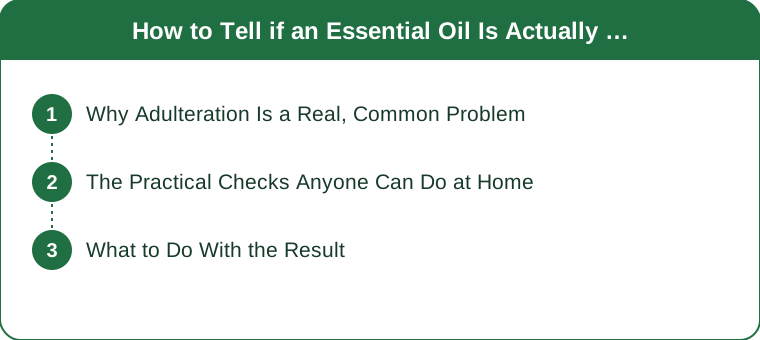
Why Adulteration Is a Real, Common Problem
The supply chain reality: the the-price-pressure-to-cut-corners (the genuinely pure oils from labor-intensive plants like rose or sandalwood being expensive to produce honestly, creating financial incentive to dilute with cheaper carrier oils or synthetic fragrance — the expensive-oils-are-the-most-commonly-adulterated), the the-blending-with-synthetic-fragrance (the some products blending a small amount of real essential oil with synthetic fragrance compounds while still labeling the bottle as pure or natural — the labeling-loopholes-allow-this-legally-in-many-markets), the the-cutting-with-cheaper-oils (the an expensive oil diluted with a similar-smelling but cheaper oil, detectable mainly through smell training and price awareness — the cutting-with-similar-cheaper-oils-is-common-and-hard-to-catch-casually), the the-no-universal-certification-requirement (the terms like therapeutic-grade having no legally standardized meaning across the industry, making the phrase itself an unreliable purity signal — the therapeutic-grade-is-marketing-language-not-a-certification), the the-country-of-origin-and-harvest-variability (the genuine batch-to-batch variation in real essential oils, from soil, season and cultivar differences, which can also mask lower-quality substitution — the natural-variability-provides-cover-for-adulteration-too), and the reframe (the adulteration risk as real and structural, particularly for expensive oils, making a purity check worth the two minutes it takes).
The Practical Checks Anyone Can Do at Home
What to actually try: the the-price-sanity-check (the a rose or sandalwood oil priced dramatically below the market rate for that plant’s actual extraction cost being close to a guarantee of dilution — the price-below-extraction-cost-is-the-single-biggest-red-flag), the the-paper-test-for-fatty-residue (the a drop of pure essential oil evaporating cleanly off paper within a day, while an oil cut with a fatty carrier oil leaves a visible ring or residue — the evaporation-test-catches-carrier-oil-dilution), the the-consistency-across-bottles-and-batches (the a reputable brand’s batch numbers correlating with slight, explainable scent variation, while a suspiciously identical scent across every bottle over years can suggest synthetic standardization rather than a real plant extract — the too-consistent-can-be-as-telling-as-too-different), the the-look-for-a-real-gc-ms-report (the a gas chromatography–mass spectrometry report being the actual lab verification method, and a brand that provides one for a specific batch is offering real evidence, unlike a vague purity badge — the gcms-report-is-the-real-verification-most-marketing-badges-arent), the the-scent-fatigue-and-complexity-check (the a genuine essential oil’s scent evolving in layers over the sniffing period, connecting to the essential-oil-scent-fatigue-guide account of how real oils behave, while a flat single-note smell suggests synthetic fragrance — the scent-complexity-over-time-is-a-real-clue), and the frame (the home-checkable signals as unrealistic pricing, the paper evaporation test, batch consistency patterns, a real GC-MS report if offered, and scent complexity — none definitive alone, but strong together).
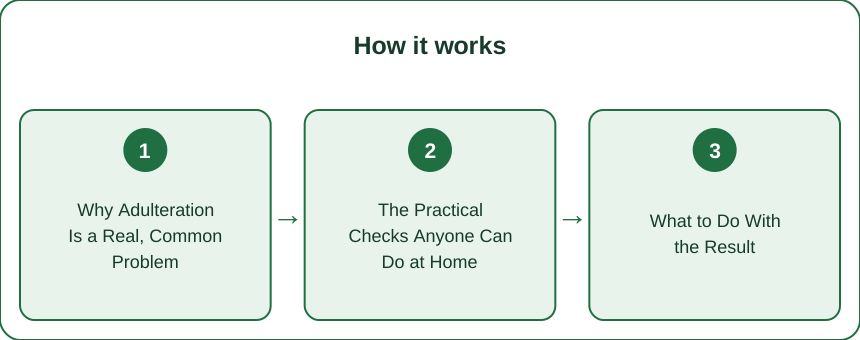
What to Do With the Result
Practical next steps: the buy-from-brands-that-publish-batch-specific-testing (the a brand routinely providing GC-MS reports tied to specific lot numbers being the strongest available purity signal for a home buyer — the batch-specific-documentation-beats-general-purity-claims), the the-start-with-a-small-bottle-from-a-new-brand (the testing a small size before committing to a large bottle from an unfamiliar source, limiting the cost of a bad purchase — the small-first-purchase-limits-the-downside), the the-trust-consistent-personal-experience-over-a-single-check (the a bottle that performs and smells consistently the way that plant’s oil should, session after session, being a meaningful ongoing signal beyond a single one-time test — the ongoing-consistency-adds-to-the-evidence-over-time), the the-be-most-cautious-with-the-most-expensive-oils (the applying the most scrutiny specifically to rose, jasmine, sandalwood and other high-cost oils where the incentive to adulterate is highest — the concentrate-scrutiny-where-the-incentive-to-cheat-is-strongest), the the-safety-matters-more-than-purity-philosophy (the checking any essential oil against general essential-oil-safety-guide guidance regardless of purity level, since even a genuinely pure oil still carries its own safety considerations — the purity-and-safety-are-separate-questions-both-worth-asking), and the frame (the practical response as buying from batch-testing brands, starting small with new sources, and concentrating the most scrutiny on the highest-cost, most commonly adulterated oils. This is general information, not medical advice.)
Verifying essential oil purity without a lab comes down to a handful of practical checks: a price far below what honest extraction of that plant would cost is the single clearest red flag, followed by the paper evaporation test for carrier-oil dilution, scent complexity over time, and — best of all — a brand that actually publishes batch-specific GC-MS lab reports rather than a vague purity badge. None of these checks is definitive alone, but together they catch most common adulteration, especially on the expensive oils like rose and sandalwood where the financial incentive to cut corners is highest. Buying small from unfamiliar brands and applying the most scrutiny to the priciest oils keeps the risk manageable either way. This is general information, not medical advice.
Keep Reading
This article is for general informational purposes only and is not medical advice. Always consult a qualified health professional for guidance specific to you.