Scent Fatigue: Why Your Favorite Essential Oil Stopped Doing Anything for You
A favorite essential oil that used to instantly shift your mood can, after weeks of daily use, start to feel like it does nothing at all — and the instinct is to assume the oil itself was never that effective. The real explanation is a well-documented phenomenon called scent fatigue, or olfactory adaptation, and it changes how essential oils should actually be used long-term.

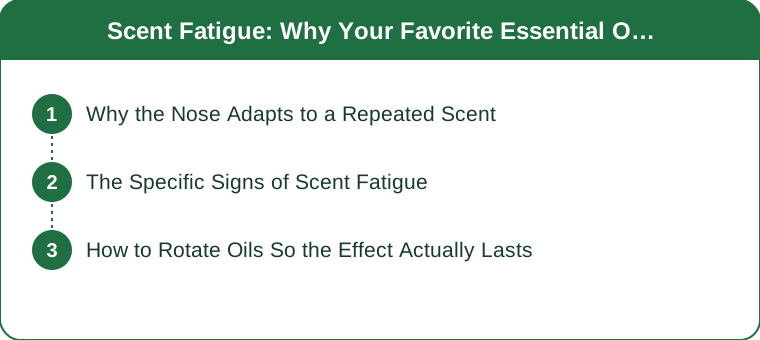
Why the Nose Adapts to a Repeated Scent
The sensory mechanism: the the-olfactory-receptors-desensitize (the same scent receptors firing repeatedly to an identical smell literally reducing their own sensitivity over time, a documented sensory adaptation process — the it’s-a-nose-mechanism-not-a-mood-failure), the the-brain-filters-out-constant-stimuli (the brain deprioritizing unchanging background sensory input generally, the same reason you stop smelling your own home after living there — the constant-signal-gets-tuned-out), the the-daily-repetition-accelerates-it (the using the identical oil at the identical time every single day speeding up the adaptation compared to occasional use — the frequency-and-consistency-drive-the-fatigue), the the-emotional-association-fades-with-overuse (the psychological link between a specific scent and a specific calming or energizing effect, per the essential-oils-for-relaxation-and-calm-guide logic, weakening the more automatic and unnoticed the exposure becomes — the association-needs-some-novelty-to-stay-strong), the the-its-a-known-phenomenon-not-a-personal-issue (the olfactory adaptation being a well-studied sensory phenomenon across scent categories generally, not unique to essential oils or to any one person’s nose — the this-happens-to-everyone), and the reframe (the fading effect as the nose and brain doing exactly what sensory systems do with constant repeated input — not a sign the oil was placebo all along).

The Specific Signs of Scent Fatigue
How to recognize it: the you-cant-smell-it-anymore-in-the-room (the walking into a space with the diffuser running and not registering the scent at all, while someone else entering fresh clearly can — the a-visitor-notices-what-you-dont), the the-effect-fades-but-others-still-notice-the-scent (the emotional or calming effect disappearing even though the scent is objectively still present and smellable to others — the effect-fades-faster-than-detection), the the-only-happens-with-your-most-used-oil (the a rarely used second oil still producing a noticeable effect while the daily one does nothing — the it’s-oil-specific-not-a-general-decline), the the-a-break-restores-it (the setting the oil aside for a week or two and the effect returning noticeably stronger — the the-clearest-confirmation-test), the the-its-not-a-quality-or-dilution-issue (the same bottle, same dilution, working fine for someone else in the household or after your own break — the rules-out-a-product-problem), and the frame (the signs as reduced in-room detection, a faded effect despite objective presence, oil-specificity, and restoration after a break — together these confirm adaptation rather than a genuinely ineffective product).
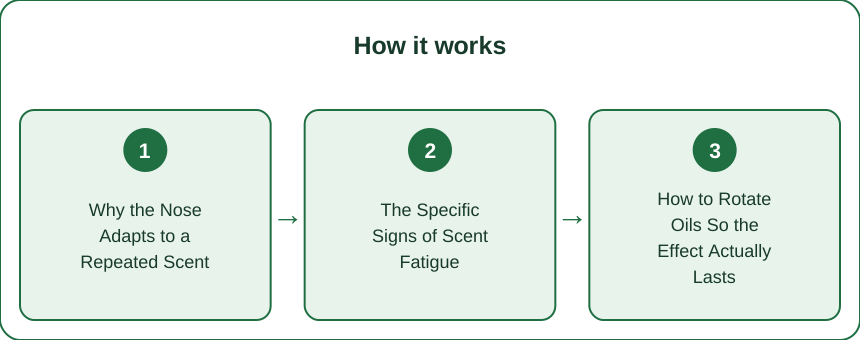
How to Rotate Oils So the Effect Actually Lasts
The practical fix: the build-a-rotation-of-three-to-four-oils (the cycling through a small set of oils with similar intended effects — several calming options, for instance — rather than relying on one indefinitely, from the how-to-blend-essential-oils-guide logic — the rotation-prevents-any-single-one-from-fatiguing), the the-weekly-or-biweekly-swap-schedule (the switching the primary oil on a set schedule rather than waiting until the fatigue is already fully set in — the proactive-rotation-beats-reactive-fixing), the the-reserve-a-signature-scent-for-specific-moments (the keeping one particularly effective oil for occasional, meaningful use only, preserving its potency as a strong occasional even more effective than daily use — the scarcity-preserves-the-effect), the the-blending-refreshes-a-familiar-scent (the combining a fatigued oil with a new complementary one creating enough novelty to partially restore its impact without fully retiring it — the blend-instead-of-discard), the the-give-a-full-week-off-periodically (the a complete week without a specific oil being enough for meaningful receptor and association recovery in most cases — the a-week-is-usually-enough), and the frame (the practical fix as rotating a small set of oils on a regular schedule, saving one signature scent for special moments, blending to refresh a fatigued favorite, and taking periodic full breaks — the goal is variety, not finding a new all-time favorite every time the old one fades).
The fading effect of a favorite essential oil after weeks of daily use is a documented sensory phenomenon called scent fatigue or olfactory adaptation, not evidence the oil was never actually effective — repeated exposure to an identical scent literally reduces receptor sensitivity and gets filtered out by the brain, the same way a home’s own smell disappears to the people living in it. The clearest signs are not registering a scent that’s still detectable to a visitor, an effect that fades even though the smell is objectively present, the fatigue being specific to the most-used oil while a rarely used one still works, and the effect returning after a break. The fix is rotating a small set of three to four oils on a regular schedule instead of relying on one indefinitely, saving a particularly effective signature scent for occasional meaningful use, blending a fatigued favorite with something new to refresh it, and taking a full week off periodically to let receptor sensitivity reset.
Keep Reading
This article is for general informational purposes only and is not medical advice. Always consult a qualified health professional for guidance specific to you.