Can Essential Oils Actually Trigger Headaches Instead of Relieving Them?
Quick Answer: Yes — strong scents, including essential oils, are a documented headache and migraine trigger for a meaningful subset of people, even though the same oils genuinely help others; the difference usually comes down to individual scent sensitivity, not the oil’s inherent quality.
You diffused lavender expecting relief and got a headache instead. That’s not you doing aromatherapy wrong — for people with scent-triggered headaches or migraines, this is a real and fairly common reaction.

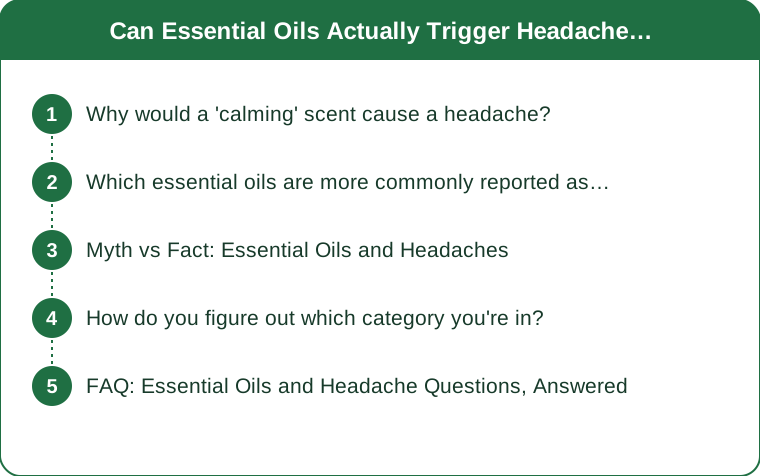
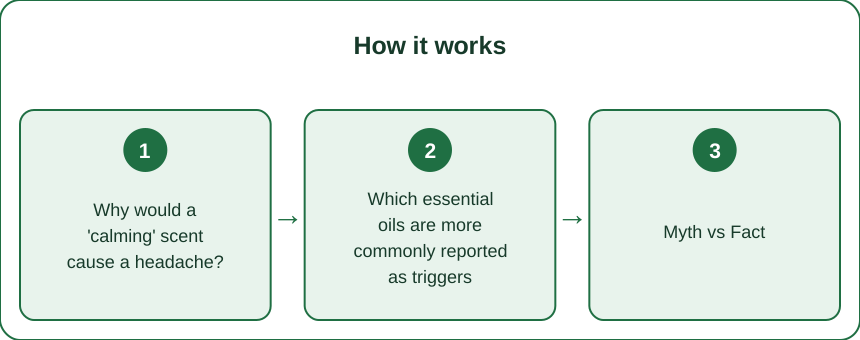
Why would a ‘calming’ scent cause a headache?
Strong odors, pleasant or not, can trigger headaches in scent-sensitive individuals through activation of the trigeminal nerve, which is also implicated in migraine mechanisms — this is a well-documented trigger category, alongside things like bright lights and certain foods.
This isn’t about the oil being ‘bad’ — the exact same lavender oil that triggers one person’s headache is genuinely relieving for another, because the sensitivity is about individual neurological response, not the substance’s objective properties.
Which essential oils are more commonly reported as triggers versus relievers?
More commonly reported as helpful for headaches: peppermint (often applied diluted to temples) and lavender, in low concentrations, for many people.
More commonly reported as triggers, especially in higher concentrations or with prolonged diffusion: strong, sharp scents like eucalyptus, cinnamon, and some citrus oils tend to be flagged more often by scent-sensitive individuals — though this varies significantly by person.
Concentration and duration matter as much as the specific oil — a brief, diluted exposure and hours of continuous strong diffusion can produce opposite reactions in the same sensitive person.

Myth vs Fact: Essential Oils and Headaches
Myth: If an oil is natural, it can’t trigger a headache. Fact: Natural origin has no bearing on whether a scent triggers a headache — trigeminal nerve activation responds to strong odor molecules regardless of source.
Myth: Diluting an oil removes its headache-triggering potential entirely. Fact: Dilution reduces intensity and risk but doesn’t eliminate it for genuinely scent-sensitive individuals — lower concentration helps, but isn’t a guarantee.
Myth: Essential oil headaches only happen with direct skin application. Fact: Diffused, airborne scent alone is a common trigger pathway — you don’t need topical contact for this reaction to occur.
How do you figure out which category you’re in?
Track a simple pattern: note which oils, what concentration, and how long before symptoms start or improve, across a few separate exposures — a scent-triggered headache typically starts within 15-30 minutes of exposure, which helps distinguish it from an unrelated headache that happens to coincide with oil use.
If you suspect sensitivity, test new oils in small amounts, well-ventilated spaces, for short durations first, rather than starting with an all-night diffuser session — this limits the downside while you figure out your own pattern.
FAQ: Essential Oils and Headache Questions, Answered
Is it common for essential oils to trigger headaches?
It’s a recognized pattern among scent-sensitive individuals and migraine sufferers specifically, though most people who enjoy essential oils don’t experience this reaction.
Can the same oil both help and hurt depending on concentration?
Yes — lower, diluted concentrations are more commonly reported as helpful, while stronger or prolonged exposure to the same oil more often triggers a reaction in sensitive individuals.
Should people with migraines avoid essential oils entirely?
Not necessarily, but caution and small-scale testing is reasonable given trigeminal nerve involvement in both migraines and scent-triggered headaches. This is general information, not medical advice.
TL;DR:
- Strong scents, including essential oils, are a documented headache/migraine trigger for some people
- Natural origin doesn’t prevent an oil from triggering a headache — concentration and individual sensitivity matter more
- Track timing (15-30 min onset is a scent-trigger hallmark) to identify your own pattern
- Test new oils in small amounts and well-ventilated spaces before longer exposure
This is general information, not medical advice — persistent or severe headaches deserve a professional evaluation.
Keep Reading
This article is for general informational purposes only and is not medical advice. Always consult a qualified health professional for guidance specific to you.